
This morning, the BBC reported renewed concern around the dangers of sunbed use and rising melanoma rates in young people. It’s not new information. But it is urgent.
Here’s the stat that matters:
Using sunbeds before the age of 35 increases your risk of melanoma — the most serious form of skin cancer — by 59% to 75%.
Not 5%. Not 15%.
Up to 75%.
And that risk increases with every session.
Let’s talk about what that actually means.

Melanoma is the most dangerous type of skin cancer. It develops in melanocytes — the cells that produce pigment.
Unlike many other skin cancers, melanoma can spread to other organs if not detected early. That’s when it becomes life-threatening.
According to Cancer Research UK, melanoma is one of the most common cancers in young adults in the UK. It is:
One of the most common cancers in adults under 50. And increasing in incidence rate.
In females, the most common specific location for melanoma skin cancers in the UK is the lower limb, in males the most common specific location for melanoma skin cancers in the UK is the trunk (2016-2018).
(Source: Cancer Research UK, Melanoma skin cancer statistics)
This isn’t a later-life issue. It’s affecting young adults in their prime.
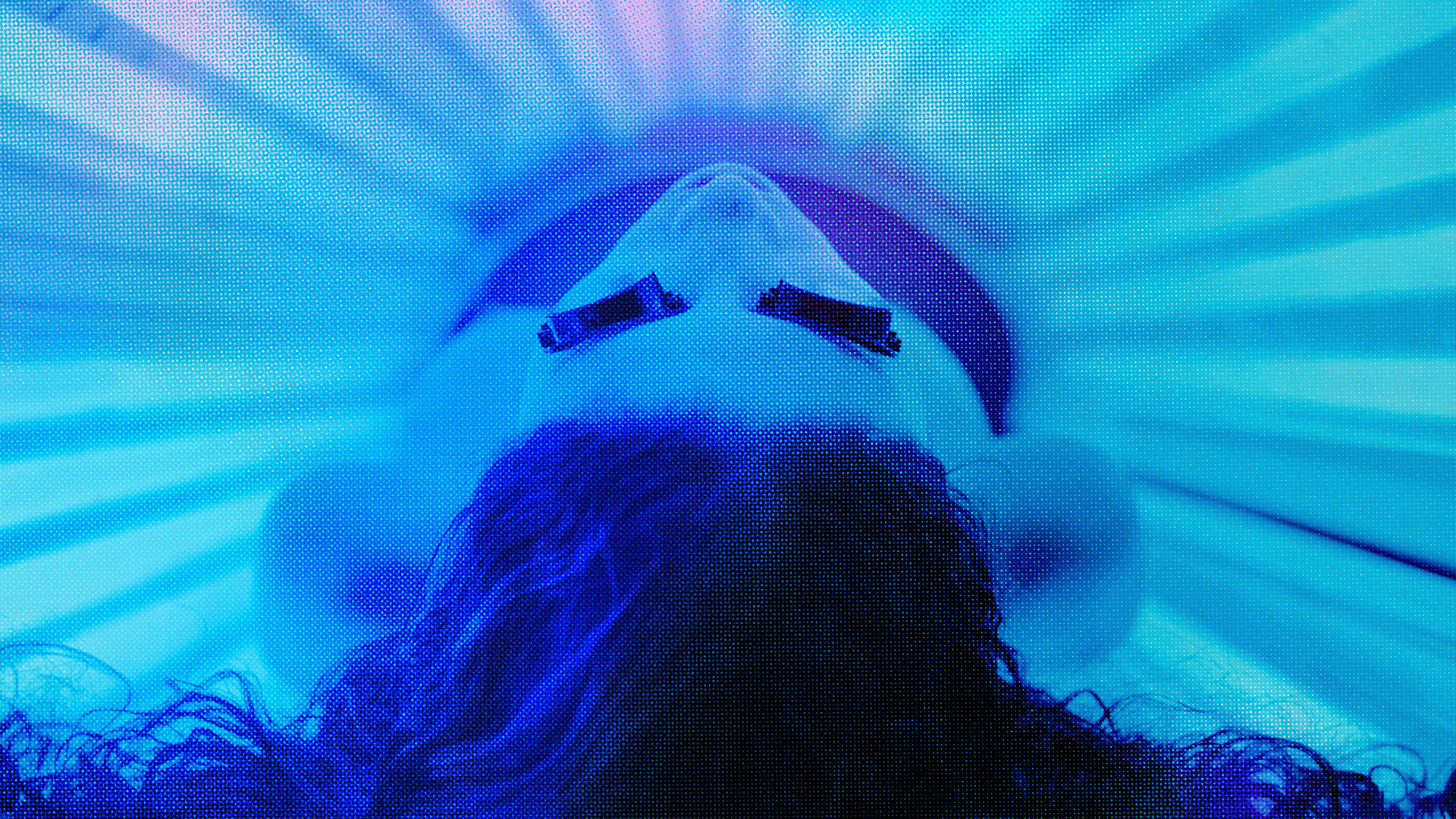
The International Agency for Research on Cancer (IARC) classifies UV radiation from sunbeds as a Group 1 carcinogen.
That’s the same category as:
Tobacco
Asbestos
We would never frame smoking as “a quick confidence boost before a holiday.”
Yet indoor tanning has often been marketed that way.
Sunbeds emit high-intensity ultraviolet (UV) radiation. This radiation:
Penetrates the skin deeply
Damages DNA within skin cells
Causes genetic mutations
Triggers uncontrolled cell growth (cancer)
And the damage is cumulative.
One study showed that using a sunbed at least once a month can increase your risk of skin cancer by more than half.
We all love glowing skin, but there really is no “safe base tan.” There is just DNA damage.
Using sunbeds before 35 also increases the risk of:
Basal Cell Carcinoma — risk increases by 69% before age 40 with any history of indoor tanning
Squamous Cell Carcinoma — particularly when use begins young
Premature ageing — coarse, leathery, wrinkled skin far earlier than expected (see below)
Eye damage — including cataracts and melanoma of the eye
So when we talk about “a healthy glow,” it’s worth asking: at what cost?
The picture below show’s a truck driver – one side of his face was always exposed to UV as he was driving, one was not.
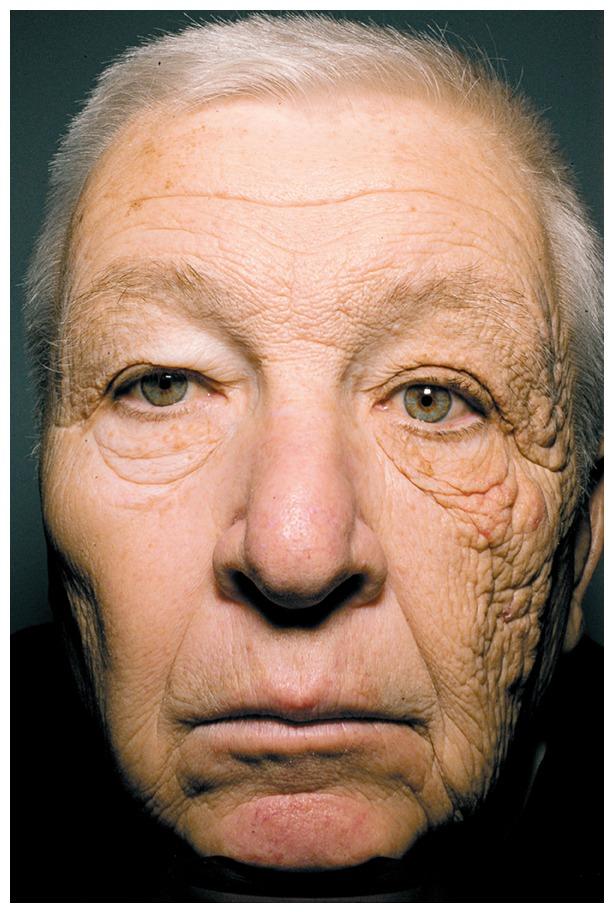
Picture from the Independent.
We understand that pull.
Skin tone can feel tied to confidence. To holidays. To looking “well.”
But here’s the truth: confidence built on cellular damage is short-lived.
At No. 23 Skin, we believe in skin that should be lived in — not harmed for a temporary aesthetic. That means:
Enjoying the sun safely
Wearing SPF daily (yes, even in London)
Using gradual, non-UV tanning options if you like a bronzed look
Knowing when to check a mole
We are not here to tell you to avoid the beach. We are here to help your skin love it too.
Here’s what we recommend:
Even occasional use increases risk.
Look for:
New moles
Changing moles
Asymmetry
Irregular borders
Multiple colours
Diameter growing
Evolution (any change)
Early detection changes everything. If you’re worried, or if something on your skin doesn’t look right, get it checked.
SPF 50+ daily. Reapply on holiday. Shade at peak UV. Sunglasses that protect your eyes.
Simple. Consistent. Evidence-based.
If something increases your cancer risk by 75%, and it’s optional, cosmetic, and avoidable — it’s not a grey area.
It’s a no.
Your wrinkles aren’t the problem.
Melanoma is.
If you’re unsure about a mole. If you’ve used sunbeds in the past. If you just want peace of mind.
If you don’t want to see a private dermatologist but have a mole that you’re worried about, your GP can help too, so don’t delay.
If you have any questions about your skin then please do not hesitate to get in touch with us on hello@23skin.co.uk.
Helen & Dr Cherry
CoFounders
No. 23 Skin
Location: 23 Ansdell Street, London W8 5BN
02039411815

Follow us
no23skin