
What causes it. What works. And how to treat acne scarring with a dermatologist in London.
Acne might be temporary. Scarring isn’t always.
And if you’ve ever thought “why is my skin bumpy and healed like this?” — you’re not alone. Acne scarring is one of the most common reasons patients come to see a dermatologist in London. Not because it’s dangerous, but because it lingers. And it affects confidence long after the breakouts have gone.
The good news? Most acne scars can be improved. Some significantly. But the approach matters.
This is your complete, medically grounded guide to acne scarring — what it is, why it happens, and how we treat it properly.

Acne scars form when inflammation damages the deeper layers of the skin.
When your skin tries to repair itself, it produces collagen. Too little collagen → depressions in the skin. Too much → raised scars.
In simple terms: it’s not the spot that scars. It’s how your skin heals it.
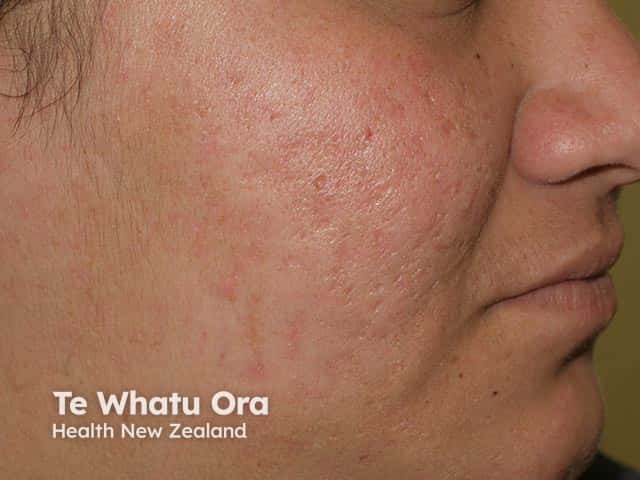
Picture credit: NZdermnet: https://dermnetnz.org/images/acne-scarring-images
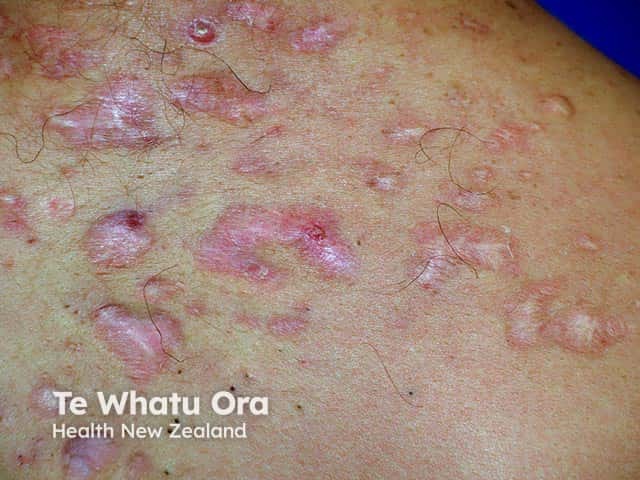
Picture credit: NZdermnet: https://dermnetnz.org/images/acne-scarring-images
Raised, firm scars caused by excess collagen
Red or dark marks — pigmentation changes that occur after breakouts have gone.
Understanding which type you have is key. Because treatment isn’t one-size-fits-all.
This is where biology matters.
You’re more likely to scar if:
There’s also emerging evidence that prolonged inflammation through breakouts disrupts normal collagen production and wound healing pathways (Layton et al., British Journal of Dermatology).
Translation: early, effective acne treatment isn’t just about clear skin — it’s about preventing scars altogether. This is one of the top recommendations by our dermatologists – seek help sooner and support your skin before the scars happen.

Dr Ketaki Bhate – Consultant Dermatologist and Acne Specialist
Short answer: not really.
Pigmentation and redness may fade over time. True scars — especially indented ones — don’t disappear without treatment.
But they can improve. Often dramatically.
Let’s cut through the noise. No miracle creams. No overnight fixes.
These are the treatments backed by evidence and used by dermatologists.
One of the most effective, low-downtime treatments.
How it works:
Tiny needles create controlled micro-injury → stimulates collagen and elastin production → skin repairs itself more evenly.
What it’s best for:
What the evidence says:
Clinical studies show microneedling improves acne scarring by up to 50–70% after a course of treatments (Alster & Graham, Dermatologic Surgery). We use the SkinPen Microneedling device for two reasons: 1. it is FDA approved and safe for acne scars; 2. it is clinically evidenced (so much so, the plastic surgeons use it in the Chelsea & Westminster hospital to help with scars).
It’s not instant. But it works — steadily, safely, and with minimal downtime.

When we need to go deeper.
Types include:

How it works:
Delivers energy into the skin to stimulate collagen remodelling and reduce vascular changes.
Best for:
Laser can be transformative — but it needs to be done properly, with the right settings, for the right skin type.

Often underestimated.
How they work:
Exfoliate the upper layers of skin and stimulate regeneration.
Best for:
They’re rarely a standalone solution for deep scars — but a useful part of a broader plan.
Not glamorous. Very effective.
These won’t “remove” scars, but they improve skin quality and support other treatments.
Here’s the truth: The best results come from combining treatments.
For example:
Because your skin isn’t one-dimensional — and your treatment shouldn’t be either.
This is exactly why joined-up skin care matters.
Earlier than you think.
You should consider seeing a dermatologist in London if:
A proper consultation means:
No guesswork. No wasted time.
But perfection? Not the goal.
We’re aiming for skin that looks like yours — just stronger, clearer, and more even.
Acne scarring isn’t just physical.
It changes how you see yourself. How you show up. Sometimes how much makeup you feel you need just to leave the house.
We understand that.
And we treat it accordingly — with clinical expertise, yes, but also with a plan that fits your life. Because your skin has to work in the real world.
The key is starting with the right diagnosis, the right expectations, and the right treatments — guided by someone who understands skin as a whole. We’re here to help. Some of us (founder and derms included) have been there and know what it is like to struggle with the marks left by acne, so we approach your skin sensitively and calmly.
Book in for a complementary review with our skin practitioners, or if you have active acne that requires medical intervention, book in for a dermatology consultation.
Reach out if you need support. We’re experts. But first and foremost, we’re human. We’re easy to talk to. No medical jargon. No snooty language. We love what we do, and could spend hours chatting skincare with you. So drop us an email or call 02039411815, anytime.
Helen
CoFounder
No. 23 Skin
02039411815

NB – the information in this post is just that – information to help you make a decision on treatment, and it should not be used in the plac e of medical advice specific to you. If you have a medical condition, please book in with one of our dermatologists, or your GP to get the right support.
Follow us
no23skin